By Răzvan Vergu, sales trainer, Salescool co-founder · Published · Updated
Cold calling mistakes, or why the robot on the other end of the line is you
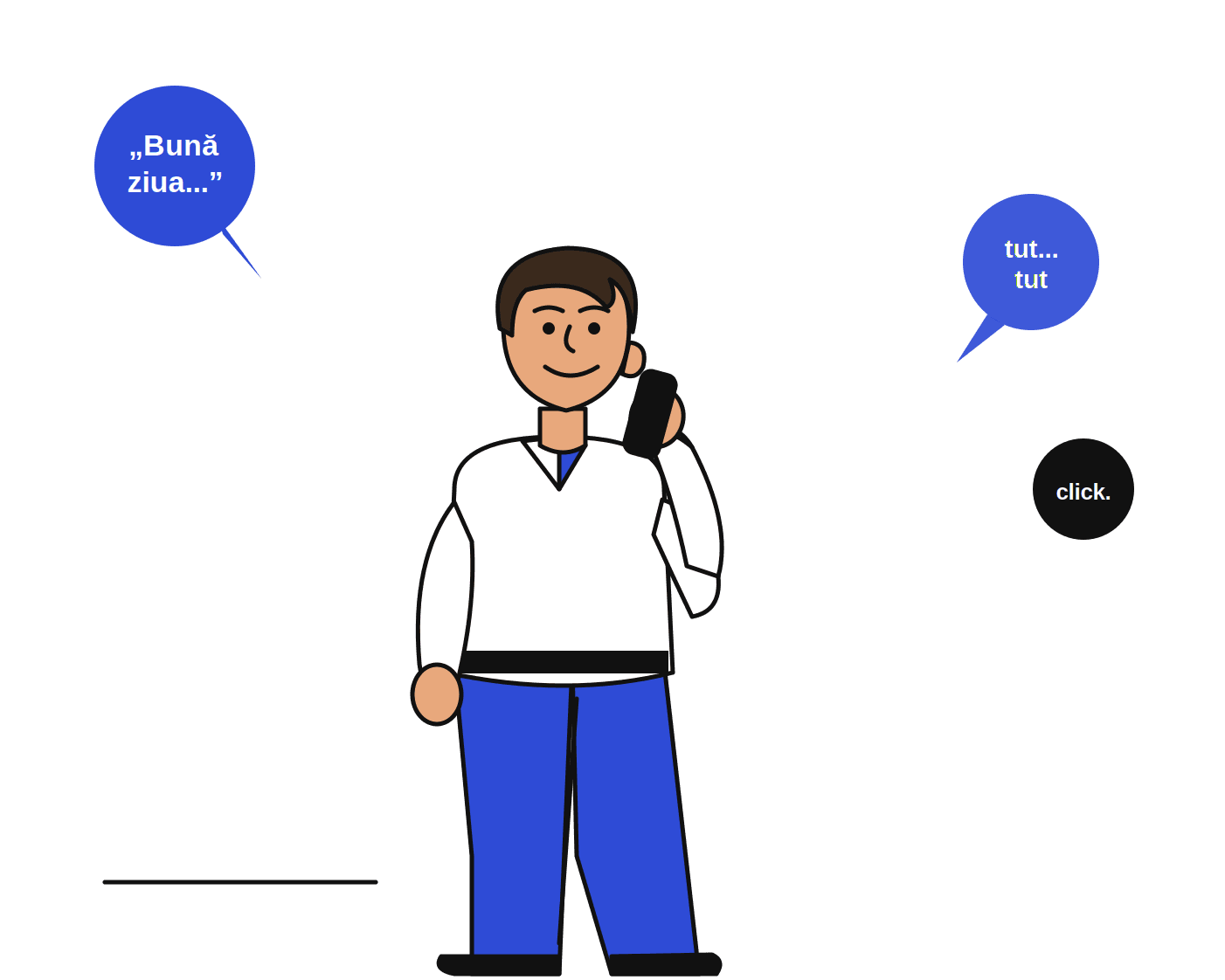
There is an unmistakable sound. The sound of someone reading. That small, unnatural pause between „good afternoon” and your name, which they have only just found on screen. The flat tone of a person reciting a poem they do not understand.
The prospect recognises it in three seconds. And in the fourth second they have already filed you away: another robot. So if you need a cold calling course to find out that reading a script word for word is killing you, let us tell you for free: if you are reading the script, you have already lost.
Cold calling mistakes: the script is not the problem. You, reading it, are
Let us be fair. The script itself is not the enemy. Structure is useful. The problem starts the moment you treat the script like a bad piece of theatre, reeled off in a monotone, hoping nobody notices.
Everybody notices.
Research from Leads at Scale is brutal here: prospects identify a sales pitch in roughly three seconds, and mechanical reading triggers instant rejection. Not because they dislike your product. Because a file is talking to them, not a person. And files get closed.
Top performers do not memorise lines. They internalise a logic, opening, reason, value, question, and then they talk like human beings. A cold calling course worth the money does not hand you a text to recite. It teaches you to think in real time, with the structure in your head rather than on the page.
Cold calling mistakes and the great illusion of the „perfect script”
There is a whole category of salespeople hunting for the magic script. The exact words. The formula that „converts guaranteed”. They search online, download a PDF from an American vendor and read it out identically to a thousand other people who downloaded the same file.
And then they wonder why everyone sounds the same.
The irony is that Gong’s data shows the exact opposite of what they believe: the most effective cold call opener is simple human courtesy, „how have you been?”, which performs 6.6 times better than average, precisely because it sounds human in a call the buyer expected to be robotic. Not a polished script. Humanity.
So no, what you are missing is not the perfect script. What you are missing is the ability to talk like a person who listens. And that does not come as a PDF download.
Cold calling mistakes: the buyer is not rejecting you. They are rejecting the robot
Let us also dismantle the favourite piece of self-pity: „people hang up straight away, cold calling does not work any more”.
People do not hang up because it is you. They hang up because you do not sound like you. You sound like a recording. And nobody stays on the line for a recording.
The analyses from Clari say it plainly: a robotic, monotone, sales-machine tone is the fastest way to drive a prospect away. And Gong adds another twist of the knife: lost calls are full of long monologues where the salesperson dominates the conversation, the buyer switches off, and the deal evaporates. Which is exactly what someone reading does: they talk over the other person without hearing them, because they are trapped in their own text.
A serious cold calling course does not teach you to recite more fluently. It teaches you to stop, listen and respond to what the person actually said, not to what is written on your page.
Cold calling mistakes and the difference between a talk track and a teleprompter
Here is the fine line most people miss. The answer is not to throw the script away and improvise chaotically, so that you fall apart at the first objection. That is the other extreme, and it is just as bad.
The answer is a flexible framework, a talk track you know so well that you no longer need to read it. The research from Salesprep puts it simply: a script read off the page gives itself away within seconds, whereas a script you understand functionally lets you respond to what the buyer said while still keeping the structure. The difference is not in the material. It is in how you use it.
A teleprompter makes you predictable. An internalised framework makes you credible. The difference between the two is exactly the difference between a booked meeting and an engaged tone.
Cold calling mistakes: if you are calling to tick a box, do not call at all
The uncomfortable truth is that most bad calls are not a script problem. They are an attitude problem. Someone calling to get through their quota of 60 calls will sound like a person who wants to finish, not like a person who wants to help. And it comes across.
After 25 years in sales, my conclusion is always the same: results come from execution, discipline and accountability, not from raw volume and ticked boxes. A mechanically read call, repeated 60 times a day, is not prospecting. It is industrial noise with a phone attached.
Salescool courses: you speak like a person, not like a page
At Salescool we do not hand out scripts to recite. We train behaviours.
We work on exactly the part everyone else misses: how you internalise a structure, how you open naturally, how you listen and how you respond in real time, through role-plays and simulated calls, until you no longer sound like a recording but like a person worth talking to. Because a cold calling course that only teaches you to read better does not make you a salesperson. It makes you a page reader.
If you have read this far and are still looking for the perfect script to recite, you probably need one more cold calling course. If you have understood that the problem is that you sound like a page rather than a person, then we speak the same language. Take a look at the Salescool programmes and see how we turn theory into measurable behaviour in the field.
If you want to sound like a person rather than a page, take a look at the sales course for beginners or an applied open sales course.
Next: Every question about sales training, in one place: The complete guide to sales training courses in Romania.